

StopWatt Reviews
StopWatt Reviews: Since electricity expenses are becoming a significant family expense, many individuals are searching for easy solutions to lower their monthly energy bills. Electricity-saving gadgets like StopWatt are becoming more popular as a result. StopWatt, marketed as a little gadget to increase electrical efficiency, has drawn interest from households looking for alternatives to costly energy-saving improvements.
But does StopWatt really work? Is it suitable for every home? And can a small plug-in device actually make a meaningful difference to an electricity bill?
In this StopWatt review, we take a closer look at what the product claims to do, how it is generally used, its potential advantages and limitations, and the important things consumers should consider before purchasing an electricity-saving device.
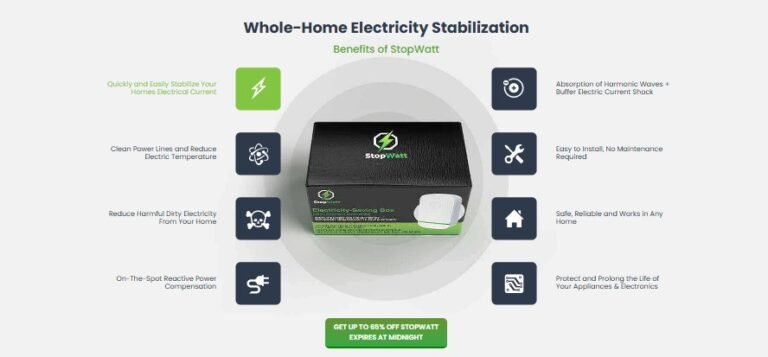

What Is StopWatt?
StopWatt is marketed as a plug-in electricity-saving device intended to help optimize the way electricity is used within a household electrical system. Its compact design is intended to make installation straightforward, without requiring major electrical modifications.
The basic concept behind products in this category is usually related to electrical efficiency, power quality, or power factor. The device is promoted as something that can be plugged into a household outlet and left operating rather than requiring complicated programming or daily maintenance.
Because electricity systems differ between homes and countries, consumers should understand that the actual effect of any power-saving device can depend on the type of electrical loads in the property, the local electrical system, and the specifications of the product.
StopWatt should therefore be viewed as an energy-efficiency product rather than an automatic solution that can guarantee a particular percentage reduction in every electricity bill.
How Does StopWatt Work?
StopWatt is generally promoted around the idea of improving electrical efficiency by addressing certain characteristics of electricity flowing through a household system.
Many electrical appliances, particularly those containing motors, compressors, transformers, or other electronic components, do not always consume electricity in the simplest possible way. Electrical systems can involve active power, reactive power, and power factor considerations.
Power factor correction can be useful in some electrical environments, particularly commercial and industrial installations where utilities may account for reactive power or power factor. However, residential electricity billing is often based primarily on energy consumed in kilowatt-hours.
This distinction is important when evaluating products like StopWatt.
A device may influence certain electrical characteristics without necessarily producing an equivalent reduction in the number of kilowatt-hours recorded by a residential electricity meter.
For this reason, consumers should be careful with broad claims suggesting that simply plugging a device into an outlet will dramatically reduce household electricity consumption.
StopWatt Features
StopWatt is promoted as a convenient energy-efficiency device with several features intended to make it appealing to ordinary homeowners.
1. Compact Design
One of the main attractions of plug-in energy-saving products is their small size. A compact device can generally be placed near an electrical outlet without occupying significant space.
2. Simple Installation
StopWatt is designed around a plug-and-use concept. Consumers are attracted to this type of product because it does not appear to require extensive electrical work or complicated installation.
Nevertheless, users should always follow the manufacturer’s instructions and avoid modifying electrical wiring themselves.
3. Low Maintenance
A plug-in device does not normally require the type of regular maintenance associated with larger energy systems such as solar panels, batteries, or HVAC equipment.
4. Intended for Household Use
StopWatt is marketed toward people who want to explore electricity-efficiency solutions for their homes. Its appeal comes largely from the possibility of improving electrical efficiency without replacing existing appliances.
5. Automatic Operation
Products of this type are generally promoted as operating continuously once connected to an appropriate outlet. This means there is no need to remember to switch the device on and off throughout the day.
What Are the Potential Benefits of StopWatt?
The biggest reason people search for StopWatt reviews is the possibility of reducing electricity expenses. Although actual results cannot be guaranteed, there are several reasons why consumers may find the concept interesting.
Easy to Try
Compared with major home energy improvements, a compact plug-in product can be relatively simple to test.
No Appliance Replacement
Energy efficiency can sometimes require replacing old refrigerators, air conditioners, washing machines, lighting systems, or other appliances. A device such as StopWatt is marketed as an option that can be used alongside existing equipment.
Convenient Design
Its compact format makes it potentially convenient for people who do not want bulky equipment installed around the home.
Potential Electrical Efficiency Advantages
Depending on the electrical environment and the exact technology used, power-factor correction or related electrical improvements can have benefits in certain applications.
However, the distinction between improving electrical characteristics and reducing household energy consumption is important. Consumers should not automatically assume that an efficiency device will reduce their utility bill substantially.
Can StopWatt Reduce Your Electricity Bill?
This is probably the most important question in any StopWatt review.
The honest answer is that consumers should not assume a guaranteed reduction in their electricity bill simply because the device is plugged in.
Electricity bills are affected by many factors, including:
- Number and type of appliances
- Heating and cooling requirements
- Household size
- Daily electricity usage
- Appliance efficiency
- Electricity tariff
- Seasonal changes
- Standby power consumption
- Local utility billing rules
- Electrical characteristics of the household
If a product affects power factor but the residential utility charges only for actual energy consumption, the impact on the bill may be limited or nonexistent.
Therefore, anyone considering StopWatt should evaluate the product based on independently verifiable specifications and realistic expectations rather than relying solely on advertised savings percentages.
StopWatt Customer Reviews
Online searches for StopWatt reviews may produce a mixture of positive, negative, and uncertain opinions.
Some customers may appreciate the compact design and simple setup. Others may report that they did not notice a significant difference in their electricity bills.
Customer experiences should be interpreted carefully.
An electricity bill can change from one month to another even when household behavior remains relatively similar. Weather, air-conditioning use, heating, appliance usage, tariff changes, and billing periods can all affect the final amount.
A single positive review does not prove that a product works for every household. Similarly, one negative review does not necessarily mean that a product is ineffective in every situation.
The most useful approach is to look for consistent evidence, technical documentation, independent testing, clear manufacturer information, and a reasonable refund policy.
StopWatt Pros and Cons
Before purchasing an electricity-saving device, it is useful to consider both its potential advantages and limitations.
Pros
- Compact and convenient design
- Intended to be easy to install
- Does not require replacing household appliances
- Can be used alongside normal energy-saving habits
- Low-maintenance concept
- May be interesting for consumers researching electrical efficiency
Cons
- Electricity savings are not guaranteed
- Results can vary between electrical systems
- Marketing claims should be independently evaluated
- Power-factor improvements do not necessarily equal lower residential electricity consumption
- It should not replace proven energy-efficiency measures
- Consumers should verify specifications, warranty, and return policies before purchasing
Is StopWatt Safe?
Electrical products should always be treated with caution.
Before using StopWatt or any similar plug-in device, consumers should check that the product is intended for their country’s electrical voltage, frequency, and outlet configuration.
It is also important to inspect the device for damage and discontinue use if it becomes unusually hot, produces a burning smell, makes unusual noises, or shows other signs of malfunction.
Never use damaged electrical equipment or attempt to repair a mains-powered device yourself.
Consumers should also avoid plugging devices into overloaded extension cords or power strips unless the manufacturer specifically permits such use.
When there is any doubt about compatibility or electrical safety, consulting a qualified electrician is the safest approach.
How to Use StopWatt
If you decide to use StopWatt, carefully follow the instructions supplied with the product.
A typical plug-in device of this type involves:
- Checking the product specifications and electrical compatibility.
- Inspecting the device and outlet before use.
- Plugging the device into an appropriate wall outlet.
- Allowing the product to operate according to the manufacturer’s instructions.
- Monitoring your electricity usage over time.
For a meaningful comparison, do not judge results after only a few days.
Instead, compare electricity consumption over several billing periods while considering changes in weather and household behavior. Looking at kilowatt-hours rather than only the total bill can provide a more useful comparison because electricity prices and billing structures may change.
How to Save More Electricity at Home
Regardless of whether you use StopWatt, the most reliable way to reduce electricity costs is to reduce unnecessary energy consumption.
Use Energy-Efficient Appliances
Older appliances can consume substantially more energy than modern efficient models. When replacement is necessary, look for appropriate energy-efficiency ratings.
Improve Heating and Cooling Efficiency
Heating and cooling systems can represent a major portion of household electricity consumption. Maintaining filters, improving insulation, and using sensible temperature settings can help reduce unnecessary usage.
Turn Off Unused Equipment
Lights, computers, televisions, chargers, and other electronics can consume energy when unnecessarily left operating.
Reduce Standby Consumption
Some electronic equipment continues drawing electricity when it appears to be switched off. Smart power management can help reduce this unnecessary consumption.
Use Efficient Lighting
Replacing inefficient bulbs with modern LED lighting can reduce electricity consumption while maintaining adequate illumination.
Monitor Your Energy Usage
One of the best ways to reduce an electricity bill is to understand where electricity is actually being consumed. Smart meters and energy monitors can help identify high-consumption appliances and habits.
Is StopWatt Worth Buying?
Whether StopWatt is worth considering depends largely on your expectations.
If you are looking for a small device that is easy to install and are interested in exploring electrical-efficiency technologies, you may find the product worth investigating.
However, it would be unwise to purchase any electricity-saving device solely because of promises of dramatic or guaranteed savings.
Before buying, check:
- The exact product specifications
- Electrical compatibility
- Manufacturer information
- Independent testing, if available
- Warranty terms
- Refund or return policy
- Total purchase cost
- Whether the seller provides clear customer support
Most importantly, compare the expected benefit with proven alternatives such as efficient appliances, LED lighting, insulation improvements, and better control of heating and cooling.
StopWatt Reviews: Final Verdict
StopWatt is marketed as a convenient plug-in electricity-efficiency solution for homeowners who want a simple approach to managing electrical usage.
Its compact design and straightforward concept may be attractive to consumers who do not want expensive electrical modifications. However, expectations should remain realistic.
There is an important difference between improving certain electrical characteristics, such as power factor, and actually reducing the kilowatt-hours measured by a residential electricity meter. Because of this, consumers should not assume that plugging in StopWatt will automatically produce substantial savings.
The best approach is to evaluate the product based on its verified specifications, independent evidence, compatibility with your electrical system, and the seller’s return and warranty policies.
If your main objective is to lower electricity costs, StopWatt should not be considered a replacement for proven energy-saving measures. Reducing unnecessary consumption, improving appliance efficiency, managing heating and cooling, and monitoring energy usage remain important strategies.
Overall, StopWatt may be interesting for people researching household electrical-efficiency devices, but there is no universal guarantee that it will significantly reduce a residential electricity bill. Consumers should research carefully and make a purchase decision based on evidence rather than exaggerated savings claims.
Frequently Asked Questions About StopWatt
What is StopWatt?
StopWatt is marketed as a compact plug-in device intended to improve electrical efficiency in homes. Its exact performance depends on the product’s technical design and the electrical environment in which it is used.
Does StopWatt really save electricity?
Consumers should not assume guaranteed savings. Any potential effect depends on the electrical system, appliances, billing structure, and the technology used by the particular product.
Is StopWatt easy to install?
It is marketed as a plug-in product designed for straightforward use. Always follow the supplied instructions and verify electrical compatibility before connecting it.
Can StopWatt replace energy-efficient appliances?
No. A plug-in device should not be viewed as a replacement for efficient appliances, insulation, LED lighting, or responsible energy-use habits.
How long should I test StopWatt?
If you choose to evaluate it, compare several electricity billing periods rather than relying on a short-term change. Track kilowatt-hour consumption and account for seasonal differences.
Is StopWatt suitable for every country?
Electrical voltage, frequency, plug type, and utility billing practices vary by country. Check the product’s specifications before purchasing or using it.
What should I check before buying StopWatt?
Look for clear technical specifications, manufacturer information, safety certifications where applicable, warranty details, return terms, and credible independent evidence.
What is the best way to reduce an electricity bill?
The most dependable approach is to reduce actual energy consumption. Efficient appliances, LED lighting, insulation, sensible heating and cooling, and monitoring electricity use can all contribute to lower energy costs.
Conclusion
StopWatt has attracted interest because it promises a convenient approach to household electricity efficiency. Its small size and simple plug-in concept make it appealing, but consumers should carefully separate marketing claims from independently verifiable results.
Before purchasing, research the device’s specifications and understand how your electricity provider calculates charges. Most importantly, remember that improving electrical efficiency does not automatically mean that your household will use fewer billable kilowatt-hours.
For anyone considering StopWatt, realistic expectations, careful research, and proven energy-saving practices are the best way to approach the product.
